Sherwani, Prince Coat or Waistcoat: The Complete Groom Wear Guide
The main groom outfits for Pakistani weddings, real groom wear prices, how to choose a sherwani, outfits by event, and ready made versus tailored.
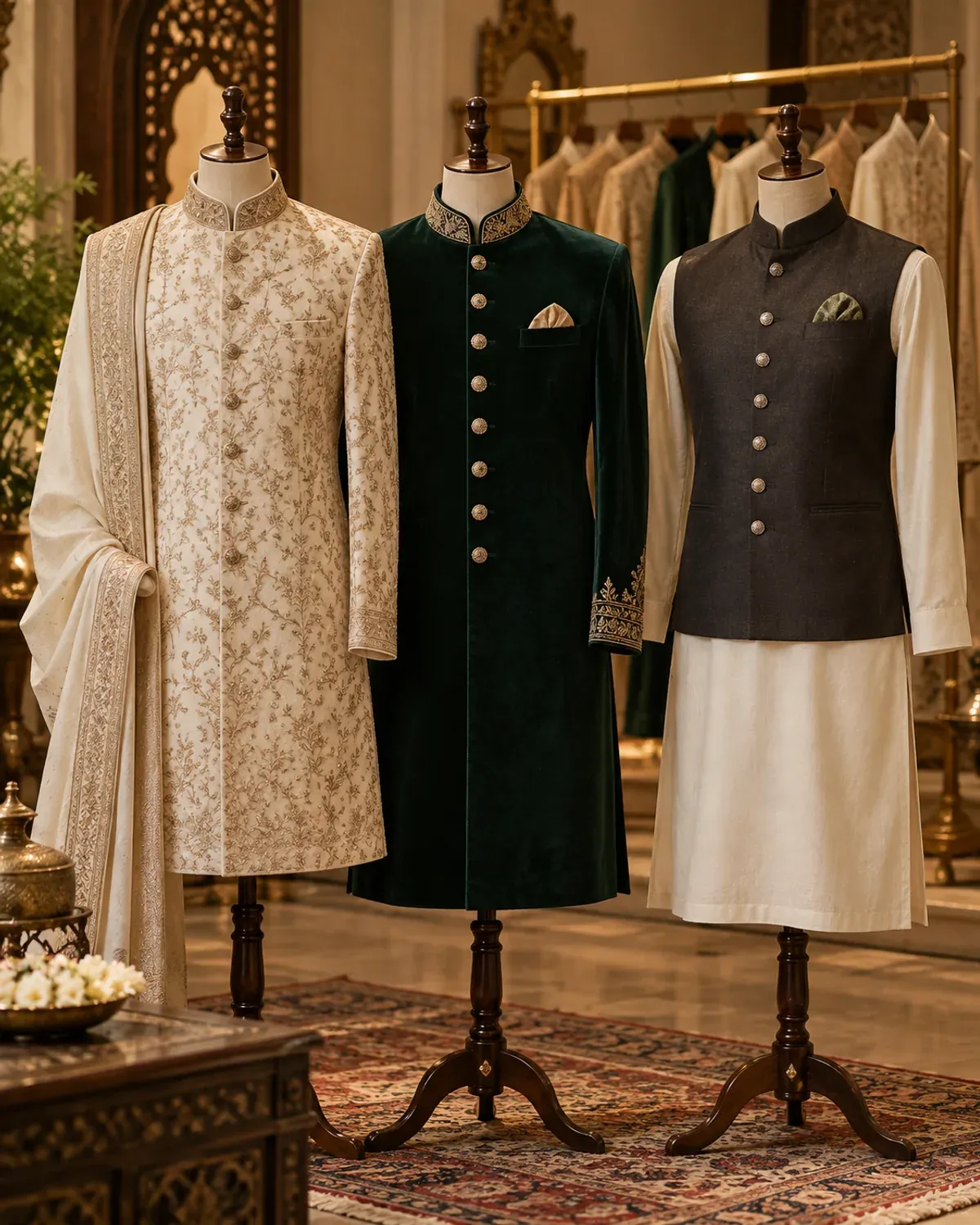
The groom's outfit gets less attention than the bride's, but it appears in every stage photo. A well chosen sherwani, prince coat or waistcoat makes the groom look confident and complete. Weddme lists 1,031 groom wear businesses, from tailors to big menswear brands. This guide explains the main options, real prices and how to choose for each event.
The main groom outfits
| Outfit | What it is | Best for |
|---|---|---|
| Sherwani | A long, structured coat worn over a kurta and shalwar or churidar | Barat, the most traditional choice |
| Prince coat | A shorter, fitted coat with a high collar | Walima or nikkah, a modern formal look |
| Waistcoat with kurta | A sleeveless waistcoat over kurta shalwar | Mehndi, nikkah and smaller events |
| Suit or tuxedo | A western suit with a shirt and tie or bow tie | Walima or reception |
Groom wear prices on Weddme
Here is what menswear businesses on Weddme publish for common groom pieces:
| Item | Typical price range |
|---|---|
| Waistcoat | PKR 6,800 to PKR 17,000 |
| Kurta or kurta shalwar | PKR 12,000 to PKR 17,000 |
Ready made pieces from brands cost less than custom tailoring. A designer sherwani with hand embroidery can cost many times more than a simple one.
Choosing the right sherwani
- Fit first. The shoulders and chest must fit well. A loose sherwani looks borrowed in photos.
- Length. Most sherwanis end just below the knee. Taller grooms can go a little longer.
- Fabric. Jamawar, raw silk and velvet are popular. Velvet suits winter weddings, lighter fabrics suit warmer months.
- Work. Light embroidery on the collar and cuffs looks elegant. Heavy work suits the barat best.
- Colour. Ivory, off white, gold and champagne are classic. Match the tone with the bride's outfit.
Outfits by event
| Event | Common choice | Tip |
|---|---|---|
| Mehndi | Kurta shalwar with a bright waistcoat | Choose comfortable fabric for dancing |
| Nikkah | White or off white kurta with waistcoat or prince coat | Simple and clean looks best |
| Barat | Sherwani with kulla or turban and khussa | The most formal look of the wedding |
| Walima | Prince coat or suit | Match with the bride's walima colours |
Ready made or tailored?
Ready made outfits from brands are faster and cheaper, and many come in standard sizes with small alterations. Tailored outfits fit better and let you choose every detail, but need two or three fittings and more time. For the barat sherwani, many grooms choose tailoring. For the mehndi and walima, ready made is often enough.
A simple timeline
- Three months before: decide the outfits for each event and set a budget.
- Two months before: order the barat sherwani and buy fabric for tailored pieces.
- One month before: first fitting, and buy shoes and accessories.
- Two weeks before: final fitting with shoes, kulla and accessories together.
Fabric by season
| Fabric | Look | Best season |
|---|---|---|
| Velvet | Rich and royal | Winter barat |
| Jamawar | Woven pattern, classic | Cooler months |
| Raw silk | Soft shine, structured | Most seasons |
| Cotton or lawn kurta | Light and breathable | Mehndi in warm weather |
Colours that look good in photos
Ivory, off white, champagne and gold are safe and timeless for the barat. Deep colours such as maroon, navy or bottle green work well when the bride wears a lighter outfit. For the mehndi, brighter waistcoats in mustard, green or orange add colour to the photos. Avoid pure bright white under strong stage lights, as it can look flat in pictures.
Getting the fit right
Ask the tailor to measure you in the kurta you will wear underneath. Check the shoulder seams sit on your shoulders, the sleeves end at the wrist bone, and you can raise your arms and sit comfortably. A good fit makes an ordinary sherwani look expensive, and a poor fit does the opposite.
Turban, kulla or no headwear?
Many families follow their own tradition here. A kulla or turban adds height and a royal look to the barat sherwani. Choose a colour that picks up the sherwani's embroidery. Try it on with the sherwani before the day, and ask someone to learn how to fix it if it comes loose.
Mistakes to avoid
- Choosing the outfit before knowing the bride's colours
- Wearing a fabric that is too warm for the season
- Skipping the final fitting with the kulla and khussa
- Leaving tailoring so late that there is no time for changes
Questions to ask the shop or tailor
- How long will the sherwani take, and how many fittings are included?
- Can I see the exact fabric and a finished piece with the same work?
- Are alterations after delivery free?
- Can you make a matching kulla or stole from the same fabric?
- What happens if the outfit is not ready on time?
Dressing the groom's side
Many families now plan matching or coordinated colours for the groom's brothers and cousins, especially at the mehndi. A simple rule, such as the same waistcoat colour with different kurtas, looks neat in group photos without costing much. Agree it early so everyone has time to shop.
Budget and value
A good way to plan is to spend most on the outfit that appears in the most photos, which is usually the barat sherwani, and save on the others. A well fitted ready made prince coat can look as good as a tailored one for the walima. For the mehndi, a quality waistcoat over a simple kurta looks smart and costs far less than a second sherwani. Ask shops about wedding packages that include a sherwani, kulla and stole together, which can cost less than buying each item separately.
Finally, think about the future. A plain prince coat or waistcoat can be worn again at family weddings and Eid, while a heavily embroidered sherwani usually stays in the cupboard. If budget is tight, that may help you decide where to spend.
Do not forget the accessories
A kulla or turban, a stole, a brooch, cufflinks and the right khussa complete the look. Our groom shopping checklist covers every item and how to budget for them.
Compare groom wear on Weddme
Browse groom wear in Lahore and Karachi, and plan the bride's side with our bridal dress guide. Our photography price guide helps you plan who will capture the look.
If your family is still looking for the right match, Weddme connects families directly. Browse rishta profiles in Islamabad, business owner profiles or profiles with a bachelor's degree.
Helpful answers from this guide
What should the groom wear for the barat?
A sherwani with kurta and shalwar or churidar, a kulla or turban, and khussa is the most traditional barat look.
What is the difference between a sherwani and a prince coat?
A sherwani is a long coat that ends below the knee, while a prince coat is shorter and fitted, with a high collar.
Should the groom buy ready made or tailored?
Many grooms tailor the barat sherwani for the best fit and buy ready made outfits for the mehndi and walima.
Find the right rishta on Weddme
If your family is still looking for a match, Weddme runs a direct, family-to-family rishta search. Start with your city, or narrow the search by profession, education or age.
Plan the wedding and the match in one place.
Compare wedding vendors by city and category, and keep your family's rishta search moving on Weddme at the same time.