Groom Shopping Checklist: Kulla, Khussa, Accessories and Budget for Every Event
Everything a Pakistani groom needs for the mehndi, nikkah, barat and walima, how to plan the budget, a shopping timeline and the common mistakes to avoid.
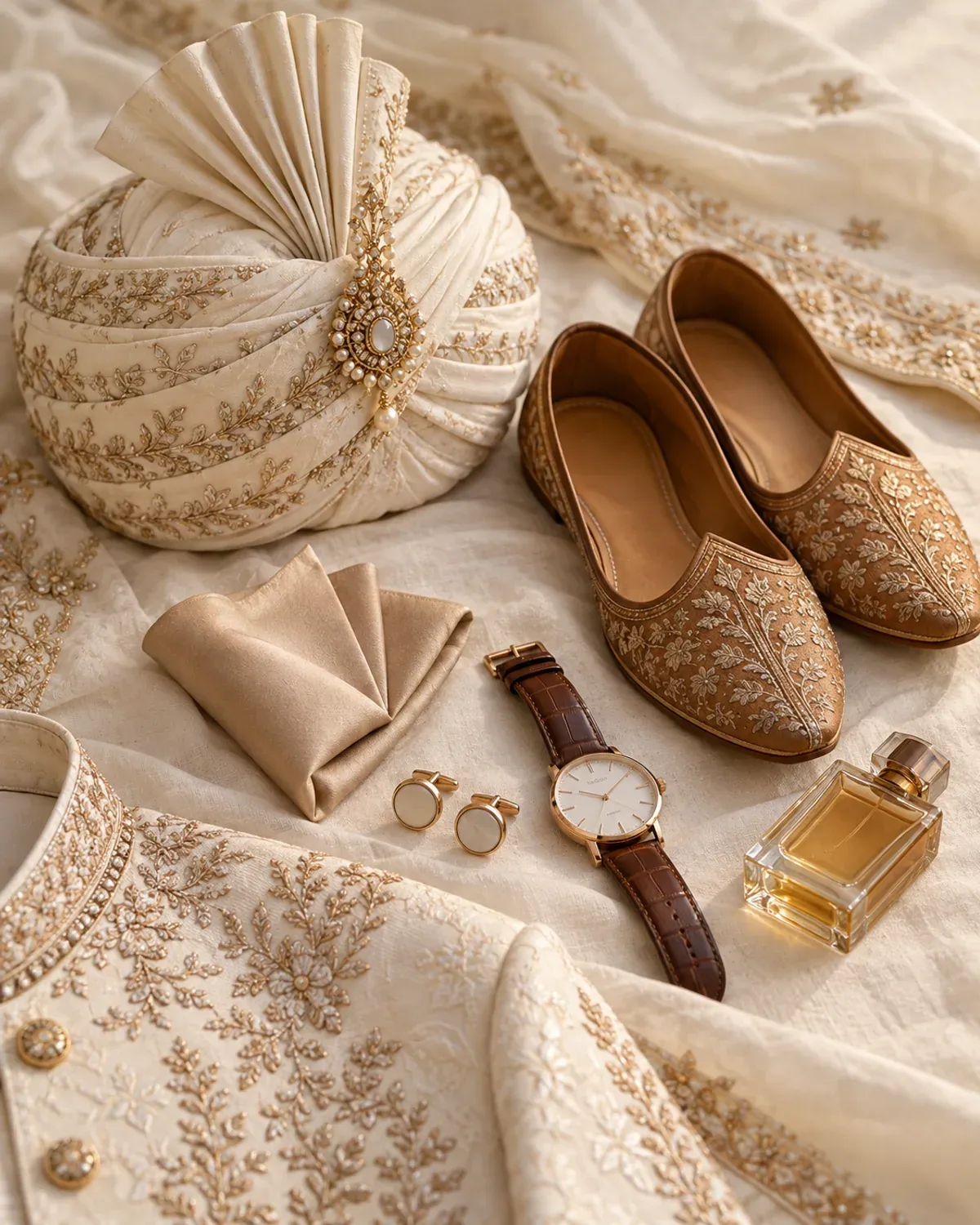
Grooms often leave shopping to the last few weeks, then rush from shop to shop. A simple checklist saves time, money and stress. Weddme lists 1,031 groom wear businesses across Pakistan. This guide lists everything a groom needs for each event, how to plan the budget, and the small items that are easy to forget.
The complete groom checklist
Outfits
- Barat sherwani with kurta and shalwar or churidar
- Walima prince coat or suit with shirt
- Mehndi kurta shalwar with waistcoat
- Nikkah kurta, often white or off white
- One spare formal kurta for small family events
Headwear and footwear
- Kulla, turban or safa for the barat
- Khussa or traditional shoes for the barat and mehndi
- Formal shoes for the walima, if wearing a suit or prince coat
Accessories
- Stole or shawl for the barat
- Brooch or kalgi for the turban or sherwani
- Cufflinks and a watch
- Pocket square for the prince coat or suit
- Sehra and flower garlands, if your family follows these customs
Grooming
- Haircut and beard trim a few days before
- Facial or skin care a week before
- Perfume or attar
Plan the budget
A simple way to plan is to split the budget: most of it for the barat look, a smaller share for the walima, and the rest for the mehndi, nikkah and accessories.
As a guide, waistcoats on Weddme mostly cost between PKR 6,800 and PKR 17,000, and kurtas between PKR 12,000 and PKR 17,000, based on prices menswear shops published.
| Item | Where to save | Where to spend |
|---|---|---|
| Barat sherwani | Choose lighter embroidery | Fit and fabric |
| Walima outfit | Use a good ready made prince coat | Tailoring for the perfect fit |
| Mehndi outfit | Ready made kurta and waistcoat | Comfortable fabric |
| Khussa and shoes | One pair for two events | Comfort for long hours |
| Accessories | Borrow from family | The kulla, which is in every photo |
Timeline for grooms
| When | What to do |
|---|---|
| Three months before | Decide the look for each event, set the budget, and share the bride's colours with your tailor |
| Two months before | Order the sherwani and any tailored pieces |
| Six weeks before | Buy the khussa, kulla and accessories |
| One month before | First fitting and break in new shoes at home |
| Two weeks before | Final fitting with all items together |
| Three days before | Haircut, collect every outfit, and pack each event's items in a separate bag |
Comfort matters on a long day
The barat can last many hours, often with heat, crowds and photos. Break in new khussa at home for a few days. Choose a kulla that sits firmly without pressing too hard. Ask your tailor to leave a little room in the sherwani for sitting on the stage. Keep a small kit with safety pins, tissues, a comb and water.
Common mistakes
- Buying the sherwani before the bride's outfit colour is known
- Skipping the final fitting with shoes and headwear
- Wearing new shoes for the first time on the barat day
- Forgetting the outfit for the nikkah or a smaller event
- Leaving the haircut to the morning of the wedding
Packing list for the barat day
- Sherwani, kurta and shalwar on a hanger, in a cover
- Kulla or turban in a box so it keeps its shape
- Khussa, plus a spare pair of comfortable shoes in the car
- Stole, brooch, cufflinks and watch in one small pouch
- Safety pins, a small sewing kit and a comb
- Perfume, tissues, a power bank and phone charger
- Water and a light snack for the long day
Who helps with what
Ask one brother, cousin or friend to be the groom's helper for each event. They hold the phone, keep the packing list, fix the kulla and stole before photos, and make sure the groom eats and drinks water. On a busy day, one calm helper saves a lot of stress and many missed photos.
Shopping smart
Visit two or three shops before you order, and compare the same item, such as a sherwani with similar fabric and work. Ask about alteration charges and delivery time before paying. Brands are good for ready made waistcoats and kurtas, while experienced tailors are often better for a sherwani that fits perfectly. Keep every receipt and the promised delivery date in writing.
A grooming timeline
| When | Grooming step |
|---|---|
| One month before | Start a simple skin routine and drink more water |
| Two weeks before | Trial haircut and beard shape |
| One week before | Facial, if you plan one |
| Two or three days before | Final haircut and beard trim |
| Wedding morning | Light grooming only, nothing new on the skin |
The day before the barat
Lay out every item for the barat in one place: outfit, kulla, khussa, accessories and the small kit. Check that nothing is missing and that the sherwani is pressed. Charge your phone and power bank, set two alarms, and go to sleep early. A calm night before makes a calmer groom on stage.
Small things that make a big difference
- A fresh handkerchief in the sherwani pocket
- Lip balm and a small mirror in the helper's bag
- Cash in small notes for customs that need it
- A printed list of family members to greet on stage
Questions to ask before you buy
- Can this item be altered if it does not fit perfectly?
- When will it be ready, and can that date be written on the receipt?
- Is there an exchange or return option for ready made items?
- Does the shop have the same item in the bride's matching colour?
Buying from shops that answer these questions clearly saves trouble later. Keep receipts together in one envelope or phone folder, with the shop's phone number and the promised dates, so anyone in the family can follow up if needed.
It also helps to keep a small running budget sheet. Write each item, its price and whether it is paid in full. Grooms often spend more than planned on small accessories, and a simple list shows where the money is going before the total surprises you.
Find groom wear on Weddme
Compare groom wear in Lahore and Karachi, or browse all groom wear businesses. Our groom wear guide explains each outfit in detail, and our vendors guide shows how to contact shops directly.
Weddme is also where many families find the right rishta. Browse rishta profiles in Multan, government employee profiles or profiles aged 31 to 35.
Helpful answers from this guide
What does a groom need for the barat?
A sherwani with kurta and shalwar, a kulla or turban, khussa, a stole, and accessories such as a brooch, cufflinks and a watch.
When should the groom start shopping?
About three months before the wedding, with the sherwani ordered around two months before and the final fitting two weeks before.
How can a groom save money?
Choose ready made outfits for smaller events, use one pair of khussa for two events, and borrow accessories from family.
Find the right rishta on Weddme
If your family is still looking for a match, Weddme runs a direct, family-to-family rishta search. Start with your city, or narrow the search by profession, education or age.
Plan the wedding and the match in one place.
Compare wedding vendors by city and category, and keep your family's rishta search moving on Weddme at the same time.