Buying Bridal Gold Safely: Karat, Making Charges and Receipts to Check
A plain guide to buying bridal gold in Pakistan: karat and purity, how gold prices are made up, weight in grams and tola, receipts, buy back and warning signs.
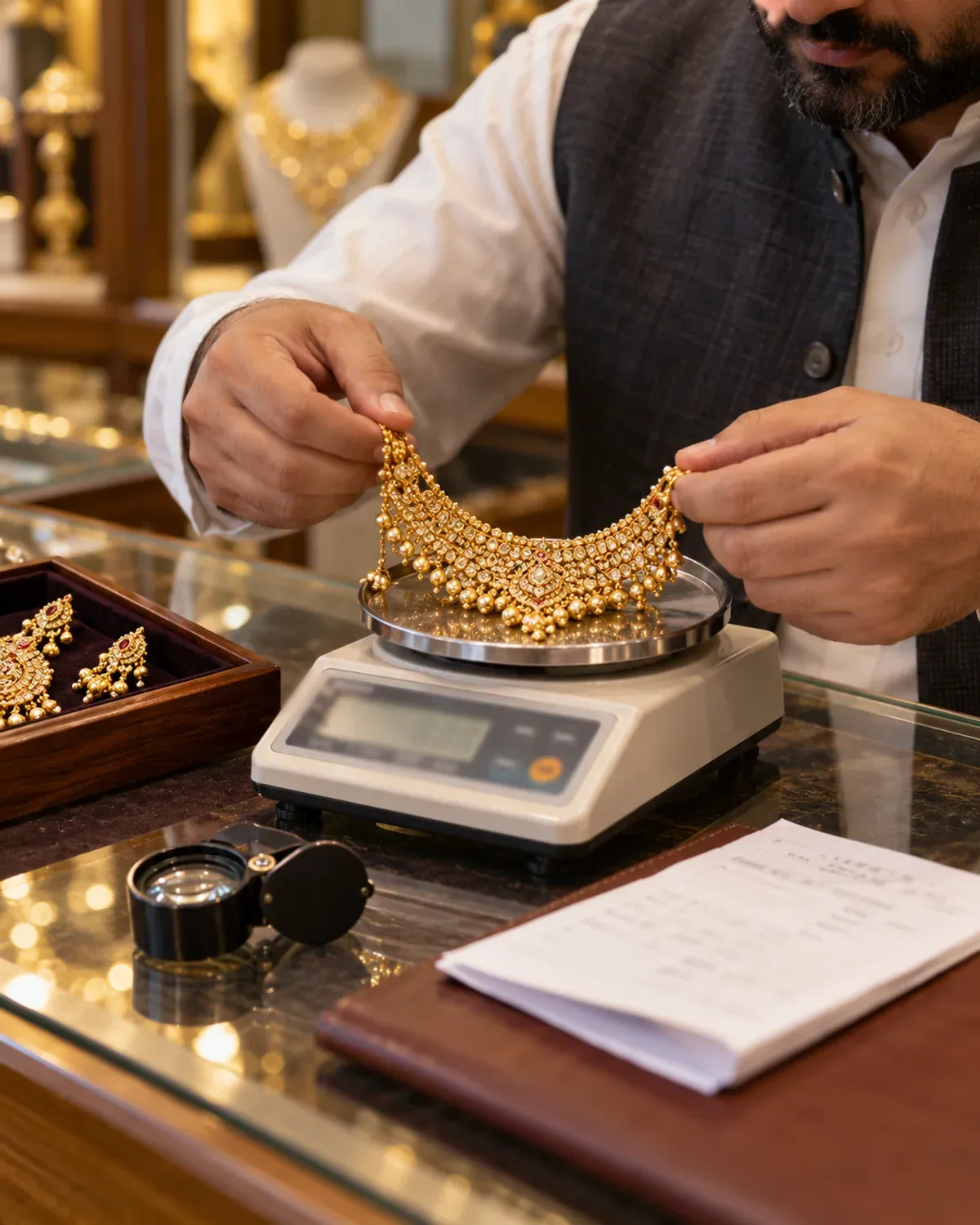
Gold is often the single biggest purchase of a Pakistani wedding, and it is meant to last a lifetime. That makes it worth buying carefully. A few simple checks at the jeweller's counter can protect your family from overpaying, from lower purity than promised, and from losing value when you exchange or sell later. Weddme lists 992 bridal jewellery businesses. This guide explains karat, weight, making charges and the receipt, in plain language.
Karat: how pure is the gold?
Karat tells you how much of the piece is pure gold. Pure gold is 24 karat, but it is too soft for most jewellery, so other metals are mixed in for strength.
| Karat | Purity | Common use |
|---|---|---|
| 24 karat | Almost pure gold | Coins and bars, rarely jewellery |
| 22 karat | About 91.6 percent gold | Traditional bridal jewellery |
| 21 karat | About 87.5 percent gold | Very common in Pakistani jewellery |
| 18 karat | 75 percent gold | Stone set and diamond jewellery |
Higher karat means more gold, a deeper yellow colour and a higher price per gram, but also a softer piece. Ask the jeweller which karat each piece is and why.
How a gold price is made up
The price of a gold piece usually has three parts:
- Gold value: the weight multiplied by the day's rate for that karat. Rates change daily, so ask for today's rate.
- Making charge: the cost of the craftsmanship. It can be a fixed amount, a charge per gram or a percentage.
- Stones and extras: kundan, pearls, polki or other stones, priced separately.
Ask the jeweller to show each part separately. A low making charge can hide a high gold rate, and the other way round.
Weight: grams and tola
In Pakistan, gold is often discussed in tola as well as grams. Ask for the weight in grams on the receipt, because it is easier to compare across shops. For pieces with stones, ask how much of the total weight is gold and how much is stones, so you only pay the gold rate on the gold.
The receipt is your protection
A proper receipt should show:
- The shop name, address and phone number
- A description of each piece
- The karat of each piece
- The weight in grams, and the stone weight if any
- The gold rate used on the day
- The making charge and any stone charges
- The total paid and the date
Keep the receipt with a photo of each piece. If you ever exchange, repair or sell the jewellery, this is what you will be asked for.
Buying back and exchange
When you sell gold back to a jeweller or exchange it for a new piece, the jeweller usually pays the gold value minus a deduction, and the making charge is not returned. Some jewellers offer a better rate for pieces bought from their own shop. Ask about this before buying, especially for designs you may want to change later.
Checking purity
Many larger jewellers can test purity in the shop with a karat testing machine, or give a written purity statement. Ask whether they will test the piece in front of you, or whether you can have it checked elsewhere. For a large purchase, a second opinion is worth the small effort.
Custom orders
For custom designs, agree the design, karat, estimated weight, making charge and delivery date in writing before paying the advance. Ask how the final price will be calculated if the finished weight is different from the estimate, and what happens if the order is late. Leave plenty of time before the wedding.
Smart buying tips
- Visit at least three jewellers and compare the same piece and karat.
- Decide your budget in grams as well as rupees, since rates change.
- Buy lasting pieces in gold, and consider artificial pieces for the heaviest looks.
- Take a family member who has bought gold before.
- Do not feel rushed. A good jeweller is happy to explain every number.
Warning signs
| Warning sign | Why it matters |
|---|---|
| Will not write the karat or weight on the receipt | You have no proof of what you bought |
| Rate much lower than other shops | The purity or weight may not be as claimed |
| Pressure to decide today | Gold is a big purchase; take your time |
| Vague answers about buy back | You may lose value later |
Keep gold safe
Store gold in a safe place, not in the bridal room or a car. Some families keep wedding gold in a bank locker until the day before the event. Keep receipts and photos in a separate, safe place, and share them only with close family.
Planning the budget in grams
Because the gold rate changes, many families plan the jewellery budget in grams or tola instead of only in rupees. Decide roughly how much gold the family wants to give, then watch the rate for a few weeks before the main purchase. If the rate rises sharply, you can choose lighter designs or buy some pieces later. This simple habit stops the budget from slipping without anyone noticing.
Exchanging old gold
Many families exchange old jewellery for new bridal pieces. Before you go, weigh the old pieces at a trusted jeweller and keep a note of the weight. At the shop, ask how much they will pay for the old gold after their deduction, and see that figure separately from the price of the new piece. Comparing the two numbers clearly shows whether the exchange is fair.
Taking someone with you
Gold shopping is easier with a calm, experienced family member who has bought jewellery before. One person can talk to the jeweller while the other checks the receipt and the numbers. Shopping on a weekday, when shops are less crowded, also gives you more time to ask questions.
Gifting gold to the bride
When the groom's family gifts gold, the same checks apply. Keep the receipt, note the karat and weight, and hand both to the bride's family together with the gift, so she has full records of what is hers. Clear paperwork keeps family relationships simple and protects the bride's property for the future.
More wedding planning
See our bridal jewellery guide for styles and sets for each event, and compare jewellers in Lahore and Karachi. Read how to find and compare wedding vendors on Weddme.
Weddme is also where families find the right match. Browse rishta profiles in Gujranwala, chartered accountant profiles or profiles aged 36 to 40.
Helpful answers from this guide
Which karat is common for bridal jewellery in Pakistan?
Most traditional bridal jewellery is 21 or 22 karat. Stone set and diamond pieces are often 18 karat.
What should a gold receipt show?
The shop details, each piece, its karat and weight, stone weight, the gold rate used, the making charge, the total and the date.
Do we get full value when selling gold back?
Usually not. Jewellers pay the gold value minus a deduction, and the making charge is not returned. Ask about the buy back rule before buying.
Find the right rishta on Weddme
If your family is still looking for a match, Weddme runs a direct, family-to-family rishta search. Start with your city, or narrow the search by profession, education or age.
Plan the wedding and the match in one place.
Compare wedding vendors by city and category, and keep your family's rishta search moving on Weddme at the same time.